Where will 2026 take us?  >> Check out our Predictions Page
GET CRITICAL TECH INSIGHTS > DISCOVER OUR VOICES OF INNOVATION PROGRAM
X

Brookfield Bets on Sovereign AI With Radiant and Ori Deal

Brookfield Asset Management has officially launched Radiant, a vertically integrated AI infrastructure company, through its acquisition of Ori Industries, a UK-based distributed AI cloud provider. The announcement marks the transition of Radiant from concept to active operations and signals a significant bet in the AI infrastructure space.

Radiant enters the market as one of the first bets from Brookfield’s AI Infrastructure Fund (BAIIF), which itself serves as the anchor for a broader $100 billion investment program. Financial terms of the Ori acquisition were not disclosed.

What Radiant Actually Is

As it launches, Radiant is targeting the delivery of high-performance, purpose-built AI compute to sovereign governments, telecom providers, and select large enterprises under long-term contracts.

Radiant will expand on Ori’s existing integrated AI Cloud assets, which operate out of more than 20 data centers around the world. The new infrastructure will be built on the NVIDIA DSX reference design, NVIDIA’s blueprint for what it calls AI factories, making Radiant an NVIDIA Cloud Partner. That designation matters because NVIDIA’s DSX architecture, which is designed to be Vera Rubin–ready, provides a standardized, scalable foundation for high-throughput AI workloads.

Alongside the long-term contract business, Radiant will continue to operate the Ori Global AI Cloud, a GPU-as-a-Service platform Ori built over seven years, for customers that need on-demand capacity and rapid deployment.

Brookfield’s head of AI infrastructure, Sikander Rashid, described the model plainly: “I think of it as a leasing business.” Radiant structures contracts to lock in revenue across the estimated five-year useful life of a chip cluster, with investment-grade customers committed to pay regardless of utilization. Brookfield has been explicit that it will not be taking on technology obsolescence risk in this model.

Energy as a First Principle

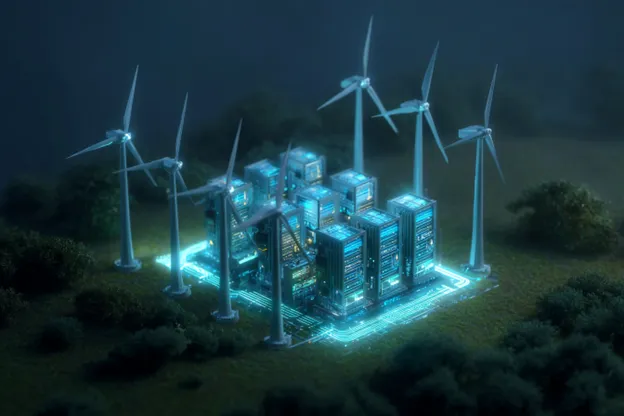
One differentiator Radiant is emphasizing is vertical integration that extends all the way to energy. AI compute is an energy consumption problem, and Brookfield’s existing portfolio includes power utilities and renewable generation assets.

Radiant’s ability to pair data center operations directly with behind-the-meter power generation represents a structural cost and reliability advantage. In a blog published with Radiant’s launch, Head of Product João Coelho noted, “Our behind-the-meter model co-locates AI Factories directly with massive-scale hydro, wind, solar, or nuclear generation. This is not an optimization of the datacenter; it is a re-architecture of the entire supply chain.”

Sovereignty as a Business Model

A growing number of national governments require that AI workloads processed on their behalf remain within their borders, and Radiant is explicitly positioning itself to meet that demand. Its sovereign framework is designed to go beyond simply deploying compute in-country.

As Radiant CMO Jonathan Symonds said, “Compute sovereignty depends on ownership of the supply chain: land, power, and capital.” Radiant plans to address all of these elements.

In terms of the technology, that means air-gapped control planes, hardware-rooted security, and single-tenant bare metal configurations that ensure sensitive datasets and model weights remain invisible to external parties, including Radiant’s own engineers. Open-weight model architectures are supported to reduce dependence on any single vendor’s proprietary stack.

The capital structure reinforces the sovereign pitch. Radiant argues that most AI infrastructure has been financed with short-term, high-cost capital—venture equity or private credit carrying hurdle rates around 20%—which creates incentive structures poorly suited to the stable, long-duration assets that national AI programs require. By financing at infrastructure-grade rates of approximately 5%, Radiant contends it can offer sovereigns compute offtake contracts of 3, 5, or 10 years with predictable, hedgeable pricing.

The TechArena Take

The launch of Radiant is a meaningful development in AI infrastructure. Sovereign governments and large enterprises increasingly want AI compute that is predictable in cost, physically located in-country, and not delivered by a US hyperscaler carrying geopolitical and data residency complications.  

Radiant is designed precisely for that buyer. With long-term contract structures, NVIDIA-validated architecture, and the energy integration to underpin reliable operations, Brookfield has assembled a credible stack.

The risk, as with any infrastructure-scale bet, lies in execution timing. AI chip generations turn over quickly, demand patterns from sovereign customers are still maturing, and $100 billion programs are easier to announce than to deploy. Brookfield’s contractual approach—locking customers into full payment regardless of utilization—reduces its downside but will require winning and maintaining the confidence of investment-grade counterparties in a competitive market.

Still, the resource moat is significant. Very few organizations can bring Brookfield’s combination of infrastructure experience, energy assets, and long-duration capital to bear on a compute leasing business. If the sovereign AI infrastructure market develops the way Brookfield is betting it will, Radiant will be well-positioned. Technology leaders evaluating AI infrastructure partnerships should pay close attention to what Radiant builds in its first 18 months of operation. As of today, the proof of concept is underway.

Subscribe to our newsletter

Brookfield Asset Management has officially launched Radiant, a vertically integrated AI infrastructure company, through its acquisition of Ori Industries, a UK-based distributed AI cloud provider. The announcement marks the transition of Radiant from concept to active operations and signals a significant bet in the AI infrastructure space.

Radiant enters the market as one of the first bets from Brookfield’s AI Infrastructure Fund (BAIIF), which itself serves as the anchor for a broader $100 billion investment program. Financial terms of the Ori acquisition were not disclosed.

What Radiant Actually Is

As it launches, Radiant is targeting the delivery of high-performance, purpose-built AI compute to sovereign governments, telecom providers, and select large enterprises under long-term contracts.

Radiant will expand on Ori’s existing integrated AI Cloud assets, which operate out of more than 20 data centers around the world. The new infrastructure will be built on the NVIDIA DSX reference design, NVIDIA’s blueprint for what it calls AI factories, making Radiant an NVIDIA Cloud Partner. That designation matters because NVIDIA’s DSX architecture, which is designed to be Vera Rubin–ready, provides a standardized, scalable foundation for high-throughput AI workloads.

Alongside the long-term contract business, Radiant will continue to operate the Ori Global AI Cloud, a GPU-as-a-Service platform Ori built over seven years, for customers that need on-demand capacity and rapid deployment.

Brookfield’s head of AI infrastructure, Sikander Rashid, described the model plainly: “I think of it as a leasing business.” Radiant structures contracts to lock in revenue across the estimated five-year useful life of a chip cluster, with investment-grade customers committed to pay regardless of utilization. Brookfield has been explicit that it will not be taking on technology obsolescence risk in this model.

Energy as a First Principle

One differentiator Radiant is emphasizing is vertical integration that extends all the way to energy. AI compute is an energy consumption problem, and Brookfield’s existing portfolio includes power utilities and renewable generation assets.

Radiant’s ability to pair data center operations directly with behind-the-meter power generation represents a structural cost and reliability advantage. In a blog published with Radiant’s launch, Head of Product João Coelho noted, “Our behind-the-meter model co-locates AI Factories directly with massive-scale hydro, wind, solar, or nuclear generation. This is not an optimization of the datacenter; it is a re-architecture of the entire supply chain.”

Sovereignty as a Business Model

A growing number of national governments require that AI workloads processed on their behalf remain within their borders, and Radiant is explicitly positioning itself to meet that demand. Its sovereign framework is designed to go beyond simply deploying compute in-country.

As Radiant CMO Jonathan Symonds said, “Compute sovereignty depends on ownership of the supply chain: land, power, and capital.” Radiant plans to address all of these elements.

In terms of the technology, that means air-gapped control planes, hardware-rooted security, and single-tenant bare metal configurations that ensure sensitive datasets and model weights remain invisible to external parties, including Radiant’s own engineers. Open-weight model architectures are supported to reduce dependence on any single vendor’s proprietary stack.

The capital structure reinforces the sovereign pitch. Radiant argues that most AI infrastructure has been financed with short-term, high-cost capital—venture equity or private credit carrying hurdle rates around 20%—which creates incentive structures poorly suited to the stable, long-duration assets that national AI programs require. By financing at infrastructure-grade rates of approximately 5%, Radiant contends it can offer sovereigns compute offtake contracts of 3, 5, or 10 years with predictable, hedgeable pricing.

The TechArena Take

The launch of Radiant is a meaningful development in AI infrastructure. Sovereign governments and large enterprises increasingly want AI compute that is predictable in cost, physically located in-country, and not delivered by a US hyperscaler carrying geopolitical and data residency complications.  

Radiant is designed precisely for that buyer. With long-term contract structures, NVIDIA-validated architecture, and the energy integration to underpin reliable operations, Brookfield has assembled a credible stack.

The risk, as with any infrastructure-scale bet, lies in execution timing. AI chip generations turn over quickly, demand patterns from sovereign customers are still maturing, and $100 billion programs are easier to announce than to deploy. Brookfield’s contractual approach—locking customers into full payment regardless of utilization—reduces its downside but will require winning and maintaining the confidence of investment-grade counterparties in a competitive market.

Still, the resource moat is significant. Very few organizations can bring Brookfield’s combination of infrastructure experience, energy assets, and long-duration capital to bear on a compute leasing business. If the sovereign AI infrastructure market develops the way Brookfield is betting it will, Radiant will be well-positioned. Technology leaders evaluating AI infrastructure partnerships should pay close attention to what Radiant builds in its first 18 months of operation. As of today, the proof of concept is underway.

Subscribe to our newsletter

Transcript

Subscribe to TechArena

Subscribe